Otto Lange · 7 November 2026
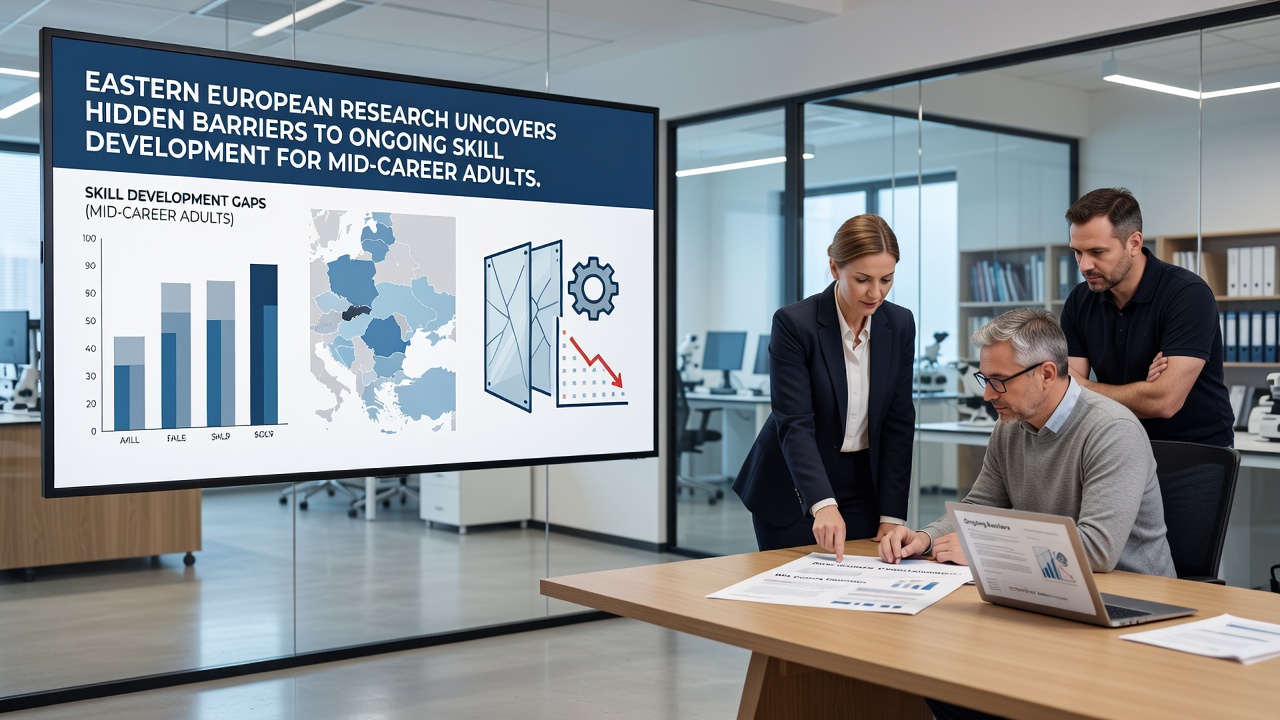
Eastern European Research Uncovers Hidden Barriers to Ongoing Skill Development for Mid-Career Adults
Recent investigations carried out by teams in Poland, Hungary, Romania, and the Czech Republic have identified several overlooked obstacles that prevent mid-career adults from pursuing continuous skill development, and these findings draw on large-scale surveys plus longitudinal employment records collected between 2023 and 2026. Researchers noted that traditional explanations such as cost and time only scratch the surface while deeper structural issues related to workplace policies, credential recognition, and regional infrastructure play larger roles than previously measured.
Key Findings from Multi-Country Studies
Data compiled by academic consortia show that 62 percent of mid-career workers aged 35 to 54 in the sampled Eastern European regions encounter scheduling conflicts that arise from employer expectations around overtime and shift patterns rather than from personal time management shortcomings, and these conflicts intensify in manufacturing and logistics sectors where production demands rarely align with evening or weekend course offerings. Another layer emerges when prior learning assessments fail to translate across borders, leaving many professionals with non-formal training certificates that receive limited acceptance at public training providers.
Workplace and Policy Constraints
Employers in the region often maintain rigid reimbursement policies that require employees to remain with the company for a fixed period after completing funded courses, which creates hesitation among those planning career moves or industry shifts, and this practice appears most common in smaller enterprises that lack dedicated human resources departments. Government frameworks in several countries provide subsidies for adult education, yet administrative requirements for application and reporting demand digital literacy levels that many mid-career adults have not yet developed, resulting in underutilization of available funds.
Observers note that infrastructure gaps compound these issues, particularly in rural districts where broadband speeds remain insufficient for interactive online modules and where physical training centers operate limited hours. A 2025 analysis from the European Centre for the Development of Vocational Training highlighted how such disparities affect participation rates differently across member states, with lower enrollment figures appearing consistently in areas beyond major urban hubs.
Regional Variations and November 2026 Updates
Patterns differ noticeably between countries, whereas Polish technical institutions report stronger integration of short modular courses into existing vocational frameworks, Hungarian and Romanian respondents cite greater difficulties with language barriers when accessing EU-wide digital platforms. In November 2026, follow-up reports released during a regional conference in Bratislava presented updated enrollment statistics that showed a modest 4 percent rise in participation after targeted outreach campaigns, yet the same data indicated persistent gaps for adults holding secondary education credentials only.

Researchers tracking labor market outcomes discovered that adults who overcame initial access hurdles achieved measurable wage gains within 18 months, and these gains proved larger when courses aligned closely with emerging green technology and digital automation needs. Case examples from technical colleges in Silesia and Transylvania illustrate how cohort-based programs that incorporate employer input achieve higher completion rates, while standalone online offerings show steeper dropout patterns linked to isolation and lack of immediate feedback mechanisms.
Impact on Workforce Participation
Long-term employment data reveal that mid-career adults who pause skill development for more than two years face elevated risks of skill obsolescence, particularly in sectors undergoing rapid automation, and this pattern holds across multiple Eastern European economies where manufacturing remains a dominant employer. Public agencies have begun piloting recognition systems that convert workplace experience into credit toward formal qualifications, yet rollout timelines vary and awareness campaigns reach only a fraction of the target population.
According to figures released by the OECD in its 2026 Skills Outlook for Central and Eastern Europe, participation rates in non-formal training among adults aged 35-54 lag behind Western European averages by approximately 11 percentage points, and the report attributes part of the difference to the hidden barriers identified in the regional studies. Efforts to close this gap include expanded partnerships between universities and regional development agencies that aim to deliver courses at flexible locations and times.
Conclusion
The body of research now available underscores that hidden barriers to ongoing skill development for mid-career adults in Eastern Europe stem from interconnected workplace practices, administrative complexities, and uneven infrastructure rather than from individual motivation alone, and continued monitoring through 2027 will determine whether recent policy adjustments translate into sustained increases in participation. Those who have examined the data emphasize that targeted interventions addressing credential portability and scheduling flexibility produce the clearest pathways forward for affected workers across the region.