
Amir Beck · 10 October 2026
How EU Investments Are Reshaping Rural Access to Digital Education Platforms Across Eastern Europe
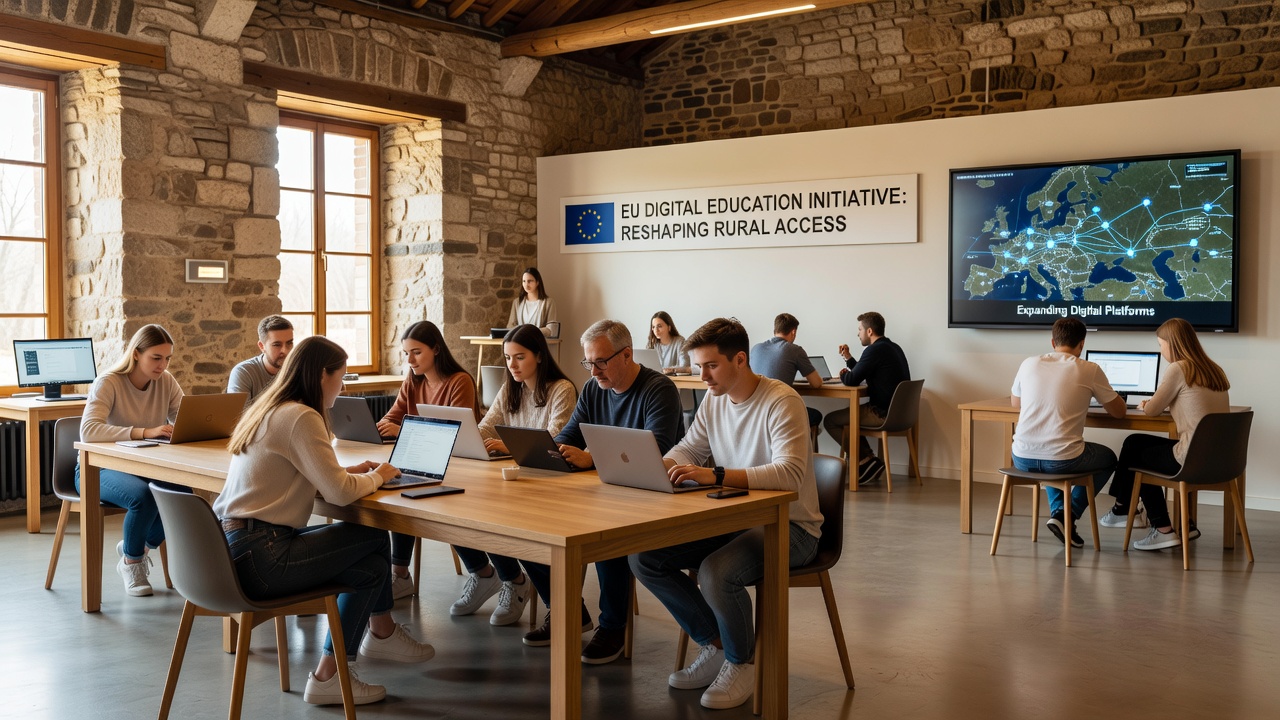
EU structural funds have directed billions toward digital infrastructure in rural Eastern Europe since the 2014-2020 programming period and its successor cycles, with allocations continuing into 2026. Countries including Poland, Romania, Bulgaria, and Hungary receive support through the European Regional Development Fund and the European Social Fund Plus, which target broadband expansion alongside educational technology deployment. These investments connect isolated communities to platforms that deliver interactive lessons, virtual classrooms, and certified courses previously available only in urban centers.
Funding Mechanisms Driving Connectivity
The European Commission channels resources through national operational programs that prioritize rural digitization, and October 2026 marks the rollout of updated guidelines under the Digital Education Action Plan that emphasize cross-border platform interoperability. Data from the EU shows that over 2.5 million rural households gained high-speed access between 2021 and 2025, while parallel grants equip schools with tablets, learning management systems, and teacher training modules. Observers note that Romania allocated roughly 180 million euros from its National Recovery and Resilience Plan to connect 1,200 remote villages, whereas Poland integrated similar funds into its Digital Poland program to reach 800,000 additional users by late 2026.
Platform Adoption in Specific Regions
Local governments partner with providers such as Moodle-based national portals and custom EU-supported applications to deliver content in multiple languages. In Bulgarian villages, students now access real-time STEM simulations through government-linked systems that sync with EU-wide credential databases, and Hungarian initiatives focus on vocational modules for agriculture and renewable energy sectors. Research indicates enrollment in these platforms rose 47 percent in targeted rural counties of Eastern Poland from 2023 to 2025, according to figures compiled by the Polish Ministry of Education. Teachers receive ongoing certification through blended programs that combine online modules with periodic in-person workshops funded by Erasmus+ mobility grants.
Technological and Pedagogical Shifts
Investments extend beyond hardware to include artificial intelligence-driven personalization tools that adapt lesson difficulty based on individual progress, and pilot projects in Romania test augmented reality overlays for history and geography curricula. Data from the OECD education database reveals that rural students participating in EU-supported digital programs demonstrate measurable gains in digital literacy scores compared with baseline assessments from 2020. Partnerships with private firms supply cloud storage and cybersecurity frameworks that meet EU data protection standards, while open-source repositories allow local developers to customize interfaces for minority languages spoken in border regions.
Measuring Reach and Equity Outcomes
Evaluation reports track participation rates through centralized dashboards that aggregate anonymized usage statistics across member states. In Hungary, 65 percent of rural secondary schools now report regular platform engagement, up from 28 percent prior to the latest funding tranche. Similar patterns appear in Slovakia and the Baltic states where cross-border collaborations share best practices on device maintenance and bandwidth optimization. Those who monitor these programs highlight that gender parity in access has improved, with female enrollment in technical courses rising alongside overall numbers. Yet connectivity gaps persist in the most remote mountainous areas, prompting additional targeted calls for proposals scheduled through 2027.
Challenges Encountered During Implementation
Administrative delays in fund disbursement affect some municipalities, and teacher shortages in digital skills remain a bottleneck despite training investments. Studies from academic consortia show that inconsistent electricity supply in certain Bulgarian districts slows platform reliability, leading authorities to bundle solar-powered charging stations into project budgets. Community feedback mechanisms incorporated into the platforms allow users to flag content gaps, and iterative updates address these issues within quarterly review cycles. External evaluations by independent research bodies confirm that transparency requirements attached to EU grants have reduced instances of mismanagement compared with earlier infrastructure projects.
Outlook Through 2027 and Beyond
Upcoming budget negotiations allocate further resources to artificial intelligence tutoring systems and expanded 5G coverage that will support mobile learning in fields and forests. Cross-regional networks established under current programs facilitate knowledge exchange between Polish and Romanian educators, while data-sharing protocols ensure compliance with evolving EU digital regulations. Progress metrics collected through 2026 indicate steady convergence between rural and urban access rates, although full parity will require sustained commitment across multiple programming periods.
Conclusion
EU investments continue to expand digital education infrastructure across Eastern Europe's rural landscapes through coordinated funding, platform development, and capacity building. Evidence from national statistics and program evaluations documents increased participation and skill acquisition in previously underserved areas. Ongoing refinements address remaining barriers while new cycles prepare for deeper integration of emerging technologies.