Otto Lange · 21 November 2026
Polish Technical Institutions Refine Apprenticeship Models to Support Sustainable Infrastructure Growth
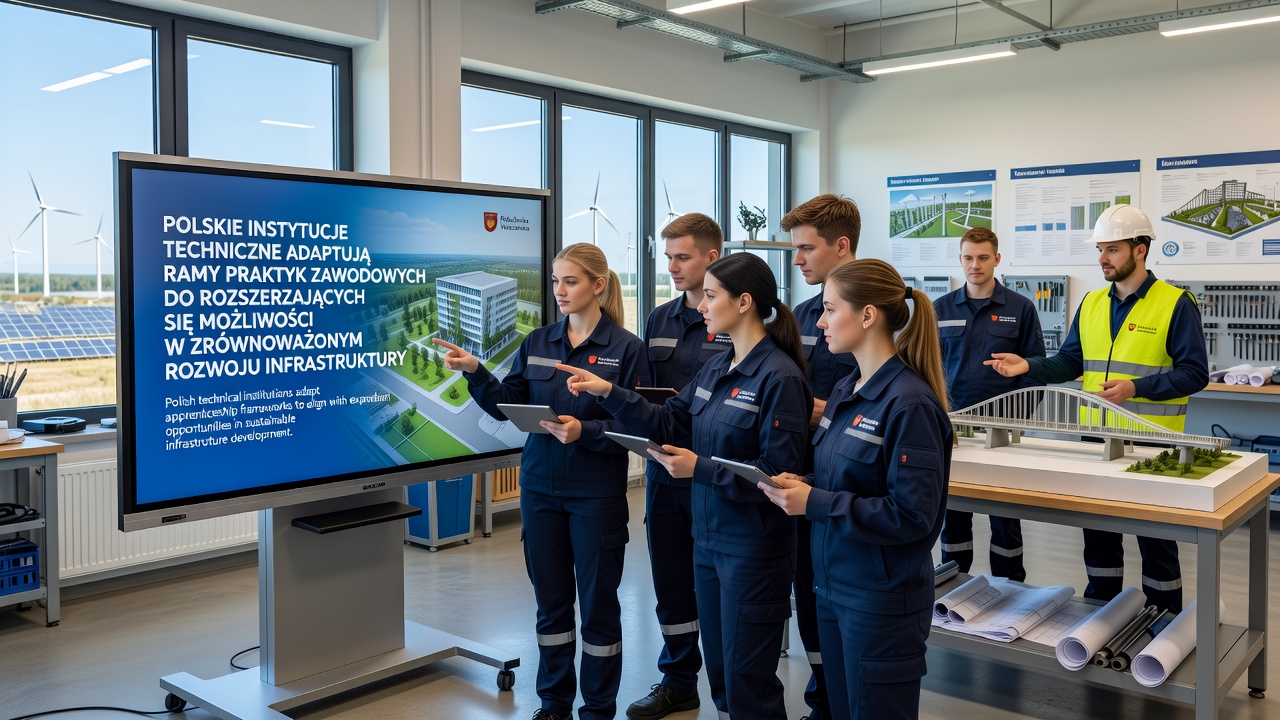
Polish technical institutions have begun updating their apprenticeship frameworks to match growing demand in sustainable infrastructure projects across the country and the wider European region, with updates drawing on data from the European Commission showing increased funding allocations for green energy and transport networks through 2026. These changes involve partnerships between universities, vocational schools, and industry players, where curriculum adjustments focus on skills like renewable energy installation, low-emission construction techniques, and circular economy practices in materials management.
Current Adaptations in Key Institutions
Warsaw University of Technology and the Gdańsk University of Technology lead several pilot programs that integrate apprenticeship modules directly into engineering degrees, allowing students to spend extended periods on active sites such as wind farm developments in the Baltic region and urban retrofitting projects in Kraków. Data from the Polish Ministry of Education and Science indicates that enrollment in these adapted tracks rose by 18 percent between 2024 and 2025, while completion rates for sustainability-focused apprenticeships reached 82 percent in the same period according to internal institutional reports.
Institutions have also incorporated digital tools for monitoring energy efficiency and waste reduction into the training sequence, and these additions align with requirements set by the EU Green Deal framework. Observers note that the shift occurred after industry feedback highlighted gaps in practical experience with emerging materials such as cross-laminated timber and recycled aggregates, prompting a revision cycle that began in late 2024 and continues into the present.
Expansion of Opportunities in Sustainable Infrastructure
Poland's infrastructure pipeline includes multiple high-value projects funded through the National Recovery and Resilience Plan, with sustainable components accounting for roughly 37 percent of total allocations as reported by national planning authorities. Apprenticeship placements now cover areas like solar grid integration, hydrogen pipeline construction, and flood-resilient bridge engineering, each requiring specific competencies that older frameworks did not emphasize at the same depth.
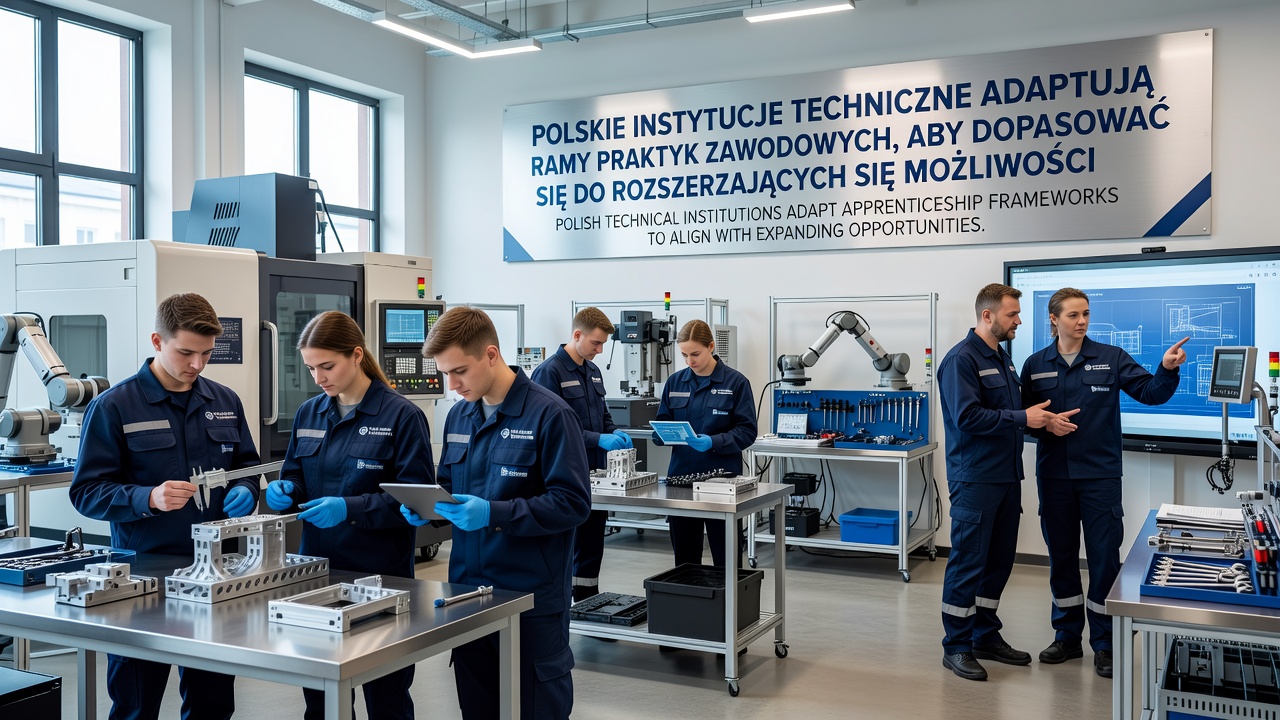
Regional centers in Silesia and Lower Silesia have reported particularly strong uptake because local employers in the energy transition sector have committed to hosting cohorts of up to 25 apprentices per semester. Figures released by the Polish Agency for Enterprise Development show that companies participating in these programs hired 64 percent of their apprentices within six months of completion during the 2025 cycle, a rate that exceeds the national average for technical trades.
Partnership Models and Curriculum Updates
Collaborations extend beyond national borders, with joint modules developed alongside institutions in Germany and the Netherlands that share similar apprenticeship traditions. These exchanges allow Polish trainees to observe large-scale offshore wind operations and zero-energy district projects, after which they return to apply comparable methods on domestic sites. Curriculum documents updated in early 2026 list mandatory modules on life-cycle assessment and digital twin modeling for infrastructure assets, both of which were added following consultation with the OECD infrastructure working group.
Assessment methods have also evolved to include portfolio-based evaluations of real project contributions rather than solely relying on end-of-term examinations. This approach mirrors practices already established in several Scandinavian technical schools and has been credited with improving retention among mid-program apprentices according to internal surveys conducted by participating Polish institutions.
Developments Expected in November 2026
A national review scheduled for November 2026 will evaluate the effectiveness of the first full cohort trained under the revised frameworks, with preliminary indicators suggesting that placement rates and skill certification levels have stabilized at higher marks than pre-2024 baselines. The review process includes input from the European Centre for the Development of Vocational Training, which maintains a comparative database covering apprenticeship outcomes across member states.
Conclusion
Polish technical institutions continue to adjust apprenticeship structures in response to measurable demand signals from the sustainable infrastructure sector, supported by coordinated policy measures and cross-border knowledge exchange. Ongoing data collection through 2026 will determine whether further refinements become necessary as project scales increase and new technologies enter widespread use.